
Emeritus Professor Sir David Goldberg
Professor of Psychiatry and Consultant Psychiatrist


Emeritus Professor Sir David Goldberg passed away on 5 September 2024.
Known as a ‘towering figure in psychiatric epidemiology’, Sir David helped transform mental health services across the world. Here, we pay him tribute.
Embarking on a remarkable career
Sir David began his medical training at the University of Oxford. From 1957 to 1959 he took on clinical work at St Thomas’ Hospital, before moving to Maudsley Hospital.
Over the next six years, Sir David trained in psychiatry with Professors Sir Aubrey Lewis and Sir Michael Shepherd. He then joined the University of Manchester, where he was Head of the Department of Psychiatry and Behavioural Science.
After almost a quarter of a century, Sir David returned to Maudsley Hospital, becoming an Emeritus Professor in 2000.
A force of nature
Sir David’s colleagues remember his unique leadership style and ability to listen to others. In the words of Emeritus Professor Sir Graham Thornicroft, ‘David was a force of nature, a force for good, and he has left psychiatry immeasurably richer for his many and lasting contributions.’
A pioneer in psychiatry
Throughout his career, Sir David authored numerous papers and books. Notable works include the ‘General Health Questionnaire’ (GHQ), which was published in 1972. The book validated and outlined tools for psychiatric research, which are widely used today. These tools have played a significant role in helping health professionals understand mental health difficulties across different cultures.
Other major achievements include developing the ‘filter model’. Co-created with Peter Huxley in the 1980s, the model describes the different stages people go through when seeking mental health care. Rather than categorising people by whether they receive psychiatric care or not, the filter model digs deeper: detailing the journey from initial symptoms to receiving care and identifying potential barriers along the way.
Teaching doctors how to talk to people
One of Sir David’s greatest passions was teaching. He played a key role in shaping the psychiatric epidemiology curriculum and training general practitioners (GPs) across the UK.
Sir David’s love of teaching took him across the world, where he trained international psychiatrists well into his retirement.
In 1997, Sir David received a knighthood for his outstanding contributions to medicine. He recalled: ‘My best memory from my career is teaching people. When I got my knighthood, the Queen asked me why she was giving it to me. I said it was because I’ve taught a generation of doctors how to talk to people.’
Although he is no longer with us, Sir David’s legacy lives on through the eponymous David Goldberg Centre on our campus. Our thoughts are with Sir David’s friends, family, colleagues and loved ones.
Details for this obituary were taken from the King’s website.
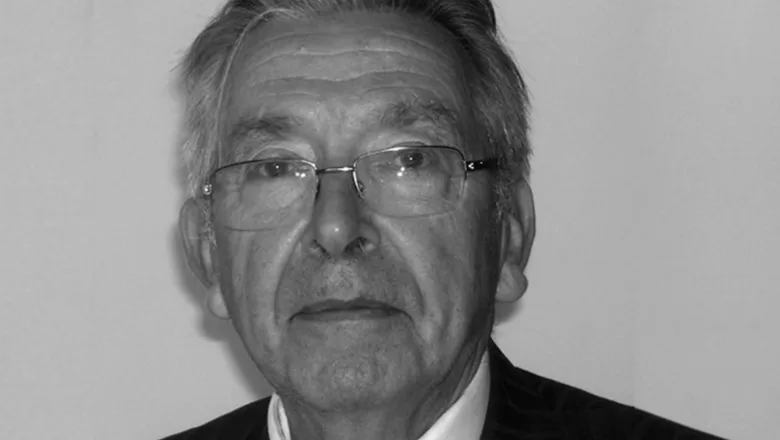
Emeritus Professor Sir David Goldberg passed away on 5 September 2024.
Known as a ‘towering figure in psychiatric epidemiology’, Sir David helped transform mental health services across the world. Here, we pay him tribute.
Embarking on a remarkable career
Sir David began his medical training at the University of Oxford. From 1957 to 1959 he took on clinical work at St Thomas’ Hospital, before moving to Maudsley Hospital.
Over the next six years, Sir David trained in psychiatry with Professors Sir Aubrey Lewis and Sir Michael Shepherd. He then joined the University of Manchester, where he was Head of the Department of Psychiatry and Behavioural Science.
After almost a quarter of a century, Sir David returned to Maudsley Hospital, becoming an Emeritus Professor in 2000.
A force of nature
Sir David’s colleagues remember his unique leadership style and ability to listen to others. In the words of Emeritus Professor Sir Graham Thornicroft, ‘David was a force of nature, a force for good, and he has left psychiatry immeasurably richer for his many and lasting contributions.’
A pioneer in psychiatry
Throughout his career, Sir David authored numerous papers and books. Notable works include the ‘General Health Questionnaire’ (GHQ), which was published in 1972. The book validated and outlined tools for psychiatric research, which are widely used today. These tools have played a significant role in helping health professionals understand mental health difficulties across different cultures.
Other major achievements include developing the ‘filter model’. Co-created with Peter Huxley in the 1980s, the model describes the different stages people go through when seeking mental health care. Rather than categorising people by whether they receive psychiatric care or not, the filter model digs deeper: detailing the journey from initial symptoms to receiving care and identifying potential barriers along the way.
Teaching doctors how to talk to people
One of Sir David’s greatest passions was teaching. He played a key role in shaping the psychiatric epidemiology curriculum and training general practitioners (GPs) across the UK.
Sir David’s love of teaching took him across the world, where he trained international psychiatrists well into his retirement.
In 1997, Sir David received a knighthood for his outstanding contributions to medicine. He recalled: ‘My best memory from my career is teaching people. When I got my knighthood, the Queen asked me why she was giving it to me. I said it was because I’ve taught a generation of doctors how to talk to people.’
Although he is no longer with us, Sir David’s legacy lives on through the eponymous David Goldberg Centre on our campus. Our thoughts are with Sir David’s friends, family, colleagues and loved ones.
Details for this obituary were taken from the King’s website.
WRITERS
Kelly Archer
Paul Brooks
Hermione Cameron
Kate Hazlehurst
Teresa Richards
Alex Scott
Karina Scuteri
Ellie Stone
Stephanie Young
DESIGN
Principal design by Jonathan Vickers
Additional design and coding by Carly Yung
Approved by brand@kcl.ac.uk
Photography by Nathan Clarke and Jim Winslet
WITH SPECIAL THANKS TO
JH Norris
ALUMNI & EDITORIAL OFFICE
King’s College London
57 Waterloo Road,
London,
SE1 8WA
King’s College London 2025 ©
InTouch is published by the University’s Philanthropy & Alumni Engagement Office. The opinions expressed in it are those of the writers and not necessarily those of the University.
If you have a story for our Autumn 2025 issue, email us at forever@kcl.ac.uk
Terms & Conditions | Privacy Policy | Cookie Policy | Accessibility Statement


ALUMNI & EDITORIAL OFFICE
King’s College London
57 Waterloo Road,
London,
SE1 8WA
King’s College London 2025 ©
InTouch is published by the University’s Philanthropy & Alumni Engagement Office. The opinions expressed in it are those of the writers and not necessarily those of the University.
If you have a story for our Autumn 2025 issue, email us at forever@kcl.ac.uk
Terms & Conditions | Privacy Policy | Cookie Policy | Accessibility Statement
WRITERS
Kelly Archer
Paul Brooks
Hermione Cameron
Kate Hazlehurst
Teresa Richards
Karina Scuteri
Alex Scott
Ellie Stone
Stephanie Young
DESIGN
Principal design by Jonathan Vickers
Additional design and coding by Carly Yung
Approved by brand@kcl.ac.uk
Photography by Nathan Clarke and Jim Winslet
WITH SPECIAL THANKS TO
JH Norris
 Built with Shorthand